
Alberta Independence Discussion
Politics • Culture • Education
Uniting Albertans through sovereignty and common sense. We bring people together for meaningful discussions that overcome limitations and express our collective voice. Listen to all perspectives, follow no single authority. Our townhalls create space where every Albertan can be heard, respected, and valued. Through open dialogue and shared principles, we build the foundation for true self-determination and ensure Alberta's interests come first in our own province
Interested? Want to learn more about the community?

Learn more first
What else you may like…
Videos
Podcasts
Posts
Articles
Alberta First not Alberta Next

This may be called Alberta Next but it does cover a large array of issues that we in Alberta have with Ottawa. I will be attending the first Alberta Next Panel in Red Deer on July 15.

00:06:29
Woah ❤️

I love these videos. Check out Rise of Alberta on Facebook for more of this content

00:01:32
August 13 - Camrose Recording
Aug 12 - Stettler Recording
Aug 11 - Three Hills Recording
Grant Abraham standing for Truth in the Vipers Den

I have had the pleasure to meet Grant in person during our tour of Battle River - Crowfoot. The man that I met was humble and courageous. I think this interview with Rebel News will tell you exactly who Grant is. He has my vote in this by-election

This is the first infographic music video I have ever seen. Good job APP
placeholder
A loan to become the 51st state?

I have wondered why Trump was so brash throwing around Canada as the 51st state - it has had many obvious impacts on the political landscape already. This article is a remarkable inside perspective of what comes with the 51st state offer from APP's Denis Modry.

What I envision is this: The 51st state rhetoric is a wink towards Alberta and all other parts of Canada that want Independence. It's a wink that the US will ratify our Declaration of Independence.

https://www.desmog.com/2025/07/22/trump-officials-discussed-500m-alberta-independence-loan-separatist-claims/

post photo preview
Are You “Being” the Independence You Demand?

Many in Alberta support independence, and many more across the West want out of Canada. You can feel it in the comments online, in the conversations at coffee shops, and in the energy at townhalls. People are restless. They want it to happen now.

But here’s the hard truth—we are a long way from making it real. Why? Because right now, we are nothing more than scattered voices. We talk. We argue. We complain. And then we wait for someone else to organize it for us.

Yes, we show up at APP meetings and other events. We nod along, we learn, we show support. But support alone doesn’t build independence.

Human beings create nations. And in this movement, we are going to focus on the latter part of that word—the “being” part. Because declarations don’t build nations. “Being” does.


The Forgotten Power of “Being”

We call ourselves human beings, but too many forget that second word. “Being” is not talk. “Being” is action. It is putting your hands, your mind, and your will into the thing you desire.

Without “being” the thing we want, it will never manifest into reality. And that’s why so many fall back on government and organizations—because it’s easier to let someone else do it for us.

But here’s the problem: those organizations are not working for you. Not the government, not the unions, not the councils or corporations. They are working for themselves. Their workers don’t create freely—they follow orders, because their paycheque depends on it.

That is the game. When the organization pays the worker, it owns the worker’s output. It buys their “being.”


Government: The Parasite That Controls the People

A parasite, by definition, is an organism that leeches resources from a living host in order to extract its own life force and proliferate. In our society, the host is the human “being,” and the parasite is the organization of government.

But governments are worse than ordinary parasites. They don’t just drain resources; they extract our “being”—our work, our money, our creativity. They take the output of human “beings” and then feed a portion of it back in the form of wages, pensions, and programs. And with that exchange, they tighten control: paying people while dictating what they can and cannot do with their own work.

Step back and you’ll see it: government is the biggest employer in society. Bigger than any corporation. Provincial, federal, municipal—it doesn’t matter. Between health care, education, administration, law enforcement, and all the agencies stacked on top, 10–20% of the population is directly paid by tax dollars.

And guess who is organized? The government. Guess where they get their money? From you and me, through taxes. And where do they spend it? Paying people. Because government, at its core, is the parasite that controls the people.

So what happens? People care more about their next paycheque than about whether their work is contributing to a healthy society. That’s the true power of the salary: the ability to buy the “being” of a person.

And let’s be honest—we have all done it. Every one of us has signed on the dotted line, exchanging our “being” for money. What do you call it when you sell your “being” to the highest bidder? There are many words for it: mercenary, prostitute, pen for hire, sellout, hack, scab.

Here’s the hard truth—another word for it is employee. And everyone continues living as if we are not all selling out our “being” to the one who pays. And the largest one who pays is the government.

We have sold our “being.” We have sold the results of our hard work to serve the vision of the organization. And here’s the irony: we all complain about what government does—without acknowledging that it is built from our own work, our own funds, our own lives. The parasites at the top control our collective output because we hand it over to them.

Then we wonder why the world feels broken. It is because we have given our power away, piece by piece, until the very system that enslaves us is built from our own hands.


The Parasite Cycle of Government

  • They leech money through taxes.

  • They extract it to feed the life force of government.

  • The parasite becomes stronger and more organized.

  • They extract even more (there are always new taxes).

  • They pay people just enough of what they’ve taken to keep the human “being” alive.


Who Really Funds the Organization?

So what do we do about it? If we are the ones funding the very organization that controls us, then the responsibility is ours.

It’s time to defund the government in the only way that matters: by taking the resources we have and choosing where to put them. Choosing which organizations we empower with our own dollars.

Does the government allow this? Of course not. Because if you could choose where your tax money went, the whole system would collapse. Grassroots organizations would thrive. Bureaucrats would starve. And suddenly the parasites wouldn’t have a host to feed on.

That’s why taxes are mandatory, enforced by law. Because if it were voluntary—if people actually got to decide—we would finally see real democracy. A society where the people direct their funds, not the parasites at the top.


Reclaiming the “Being”

I don’t say this to shame anyone for their job. We’ve all been there. I say it to show the truth: the organization only has power because it buys our “being.”

But we can choose differently. Everything we value—schools, churches, railroads, homes, associations—was built by human “beings,” not by the state. It was our hands that created them.

If we don’t like the direction of our government, then we must “be” something else. That is our power.


A Call to Self-Organization

This is a call to the individual. To you, as a human “being.” You are not alone. Millions feel this way. But they feel powerless, waiting for orders, waiting for paycheques, waiting for someone else to act.

But who else is going to do it? The truth is we can. We must.

We need to self-organize. To redirect our energy, our “being,” and yes, our money—away from the parasites and into creation. It will take courage. It will take faith. But if we build it, others will come.


The Challenge Before Us

If this resonates with you, then it’s your responsibility to put your “being” toward something higher—something worthy of God and not the parasites of government.

If we keep selling ourselves to the parasites, we cannot be surprised when the world itself becomes parasitic. The evidence is all around us.

Our creation must be given to the Creator, to GOD Himself—not to bureaucrats, not to politicians, not to the endless machine of control. We must “being” in the name of Christ, for the love of neighbor and the love of self.

Because only when our “being” is rooted in God, expressed in love, and directed toward creation—not control—will we see a future that is free, alive, and truly independent.

So the question stands:

*What are you going to do with your “being”?

Read full Article
post photo preview
Wake Up: The Battle River–Crowfoot By-Election Changed Nothing

First off, good job to all who ran their campaigns. I hope everyone had good experiences touring the region and meeting the people who live here. And congratulations to Pierre Poilievre for winning back his seat and being able to attend Parliament in Ottawa. I’ll be clear: I do value your political commentary, and I think you do a good job as the voice of the opposition. I hope your presence in the House keeps Mark Carney and the Liberals in check.

But let’s be honest about what this election actually means.

It means nothing has changed for Alberta—because no politician in Ottawa will ever deliver the sovereignty, prosperity, or real representation our people deserve.

A System That Cannot Represent Us

This was not a win for Alberta sovereignty. This was not a win for Alberta independence. Poilievre, as leader of the Conservative Party of Canada, cannot and will not stand for Alberta alone. His job is to represent Conservatives across the country. Right there is the evidence: our constitutional democracy is inadequate at representing the people.

I know there’s strong separatist sentiment in this riding because I spent four weeks touring it myself. I’m not a politician—just a citizen who wanted to understand what others think about our political, judicial, and bureaucratic system. What I found was consistent: people are unhappy, deeply frustrated, and losing faith. They are questioning what benefits government actually delivers. They are asking how their voices are being heard, how their problems are being solved—and most conclude they aren’t.

People feel powerless. Disgruntled by endless rules and policies. Frustrated with rising taxes and cost of living. Annoyed that government bends over backwards for big business while the struggles of ordinary people keep piling up. More and more, people are realizing nothing will ever be resolved at the federal level for local issues.

And yet campaigns like Poilievre’s keep telling us he’ll fight the “evil Liberals” and somehow make our lives better.

The Illusion of Politics

Here’s the pattern: the person who wins always blames someone else for the mess and tells us to vote for them so they can fix it. But think about it—over decades of watching politics, has this ever truly happened? If politicians could fix government into something that works for the people, wouldn’t we have seen it by now?

Instead, things continually get worse. Costs climb. Bureaucracy grows. Debt piles up. Division deepens. Government bloat expands. The truth is simple: no individual in the system is going to fix the system, because the system is doing exactly what it was designed to do—make citizens’ lives smaller, more controlled, and more dependent.

Government doesn’t exist to free us. It exists to manage us. To make sure we never step into self-governance and prosperity. To control every aspect of life within its borders. And it doesn’t just fail Albertans—it fails all Canadians.

Manufactured Problems, Manufactured Solutions

I don’t say this to blame Poilievre personally. Though Trudeau and Carney are fair game, the hypocrisy runs deeper than individuals. We’re told “those people” are terrible, but “my guy” will fix everything. That’s brainwashing.

We’ve all been indoctrinated—through school, media, and culture—to believe government exists to fix our problems. The truth is, government creates the very problems it pretends to solve. Inflation. Cost of living. Housing shortages. Immigration overload. Federal debt. Crime. Opioid addiction. Homelessness. Neglect of veterans and disabled citizens. If government worked, these things would improve. Instead, every single one is getting worse.

Why Representation Doesn’t Work

Here’s the math: one MP represents about 110,000 people. One voice, a hundred thousand concerns. That guarantees most voices go unheard. And with Poilievre as party leader, there is literally no way for him to represent this riding’s people directly. He admitted in a candidate forum that he won’t be around much—his job is to tour Canada. His promise? To give our issues a “big megaphone,” like pipelines.

But let’s be real. Hardisty is full of pipelines, tanks, and billions in infrastructure, and the town is still run down. The wealth doesn’t flow to the people. And while Alberta refines fuel, we still pay more at the pump than the Maritimes, who import from across the ocean. This isn’t fairness. It’s federal redistribution dressed up as equality, and in practice it means we’re being robbed.

And who’s doing the robbing? Look at the top politicians. Mark Carney, with over 100 conflicts of interest between his business ventures and his public role. Trudeau before him. Harper before that. These people are not public servants. They are managers of a machine that keeps Canadians in line while enriching themselves.

Nothing Changed Last Night

So what changed when Pierre Poilievre won his seat back? Nothing. Absolutely nothing.

If we want real change—if we want to make our lives better and secure prosperity for our children and grandchildren—it won’t come from Ottawa. It won’t come from a polished politician like Pierre—just check his Facebook page for the pageantry of his campaign. And it certainly won’t come from electing one person to try and represent a hundred thousand voices.

One person can’t fix the system because they are agents of the system. They get paid by it. If they truly fixed it, we wouldn’t need them anymore. And no politician is going to work themselves out of a job. That’s why the future has to be people-led. Government agents will never solve the problems—they are the problems.

The Responsibility Is Ours

No one is coming to fix this. If we keep waiting on Ottawa, we’ll be waiting forever. The system isn’t broken—it’s working exactly as designed, and that design does not serve us. But people here are starting to see through the illusion. More Albertans every day are realizing that the promises of Ottawa will never match the reality on the ground.

That’s why the conversation is shifting. It’s not about which politician can shout the loudest in Parliament—it’s about whether we as Albertans are willing to take responsibility for ourselves, our families, and our communities. Real change will not come from polished speeches in the House of Commons. Real change will come from people standing shoulder to shoulder, deciding together what kind of future we want, and taking the steps to build it.

If you’re one of the many who feels that things are only getting worse—more expensive, more controlled, less free—then you know it’s time. Time to stop pointing fingers east, time to stop hoping that Ottawa will suddenly care about us, and time to take back power into our own hands. That’s what Alberta Independence is about.

We don’t need more promises—we need to take action as a people. We need to be the change we’ve been waiting for. And when we do, we will leave behind something far greater than frustration: we will leave behind a legacy of freedom and prosperity that belongs to us, and to the generations who come after.

That future won’t be handed to us. We have to claim it. And together, we can.


👉 Want more real conversations about Alberta’s future? Join the movement and sign up for our newsletter at www.albertadiscussion.com.

Hashtags:
#BattleRiverCrowfoot #ByElection #PierrePoilievre #AlbertaIndependence #AlbertaSovereignty #WakeUpAlberta #SelfGovernance #ABPoli #AlbertaFirst

Read full Article
post photo preview
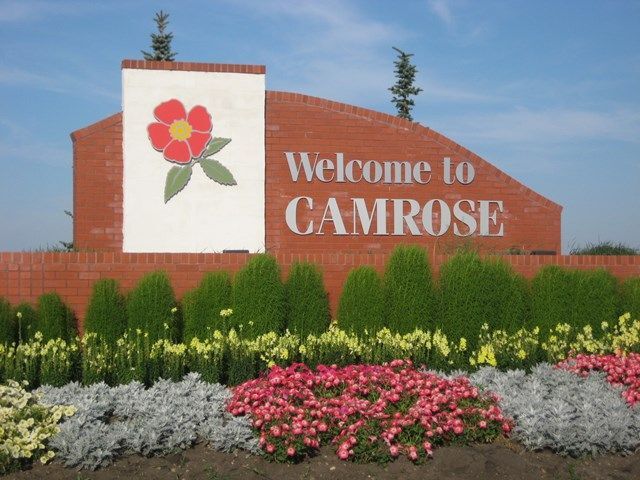
Alberta Independence Discussion in Camrose: A Future Worth Fighting For

August 13, 2025 – Camrose, Alberta

On a cool August evening, locals gathered in Camrose for another stop on the Alberta Independence Discussion tour. Though the format was simple—a handful of speakers, followed by open discussion—the weight of the questions in the room was anything but. What does independence mean? Can Alberta chart its own future outside the orbit of Ottawa? And what role does each citizen play in making that choice?


Setting the Stage

Organizer Jon Sedore opened the evening by grounding the discussion in its purpose: documenting what matters most to Albertans. Every meeting is recorded, he explained, not for spectacle but for truth—so that when political leaders and parties talk about what people want, there is a real record to compare their claims against.

He reminded the room that “independence” means many different things to different people—some see it as outright separation, others as greater autonomy within Canada, still others as aligning with the U.S. “That’s why we’re here,” Sedore said. “To ask hard questions and decide together what future we want.” His call was simple: don’t stay silent. Speak up, whether in the meeting or later at your kitchen tables and cafes, because silence is what keeps the status quo in place.


Jeff Willerton: Fixing Canada—or Leaving It Behind

Jeff Willerton wasted no time in going straight to the heart of his message: Canada is broken, and has been for decades.

Drawing on his experience in the Canadian Forces, the Taxpayers’ Federation, and as author of Fix Canada, Willerton argued that Ottawa’s problems are not mistakes of policy but deliberate patterns of control. Both major parties, he said, are “wings of the same bird,” enabling one another to impose globalist policies, from Brian Mulroney’s signing of the Rio Declaration to Stephen Harper’s approval of Codex Alimentarius. “One party sets up the shot, the other takes it,” he declared.

Though not always a separatist, Willerton admitted his affinity for Alberta’s independence grows daily. Yet he also acknowledged the possibility of remaining in Canada, provided there is a radical course correction rooted in moral clarity. “We have shed innocent blood,” he warned, citing abortion, euthanasia, and the indoctrination of youth. For Willerton, whether Alberta leaves or stays, the future must begin with repentance and a defense of life. His candidacy, he insisted, is not a wasted vote but a chance to put those issues back on the national scoreboard.


Kathy Flett: Women Leading the Movement

The second speaker, Kathy Flett, co-founder of the Alberta Women’s Independence Network (AWIN), brought both conviction and strategy to the room. She traced her journey from six years of party politics—where she saw infiltration and sabotage hollow out the Wildrose Independence Party—to her decision, alongside Angela Tabak, to build a grassroots network instead of another party.

“Our message is for women,” Flett explained. “Because in this movement, the men far outnumber us, and the language of independence has always been framed for them.” At AWIN meetings, participants are given simple maps showing the Senate and House of Commons seat distribution. The imbalance is obvious, Flett said, and when women see that Alberta can never win constitutional change under the Westminster system, they move quickly from denial to resolve.

Her message was deeply practical but also hopeful. Independence, she said, is not just about escaping Ottawa’s control—it is about creating a future where Alberta’s children can thrive without being crushed by recessions, debt, and federal dictates. She called on the men in the room to support, but also to recognize that “protecting the babies” during this uncertain transition is a women’s task. “Invite me to your living rooms,” she urged. “Five women or fifty—I’ll come. Because when women are convinced, whole families move with them.”


Ron Robertson: Independence as the Only Weapon Left

Ron Robertson, interim leader of the Independence Party of Alberta, stepped forward with the weight of lived experience. A lifelong Albertan, he spent 25 years on the police force, never imagining he would one day enter politics. But the turning point, he said, has come. “There comes a time when you can no longer sit on the sidelines,” Robertson told the room. “For Alberta, that time is now.”

Robertson rooted his talk in history. From the very beginning in 1905, he said, Alberta was forced into Confederation without consent and stripped of control over its resources. Ottawa’s interference never ended, only shifted forms. He laid much of the blame at the feet of Pierre Elliott Trudeau, describing him as a Marxist who used federalism to undermine Christian values, erode the family, and lay the groundwork for authoritarian control.

Canada today, Robertson argued, is already sliding into tyranny. From COVID lockdowns that shuttered churches while mosques stayed open, to Tamara Lich and Chris Barber facing jail for peaceful protest, to Marxist climate policies designed to restrict freedom—every example, he said, proves that reform is impossible. “Sovereignty within Canada is a lie,” he insisted. “The only weapon we have is independence.”

His vision: a constitutional republic of Alberta, where rights are guaranteed, government is limited, and politicians face criminal penalties for breaking their oath. Without that, he warned, Alberta will be dragged into poverty and serfdom. His appeal was both strategic and urgent: independence parties must unite to avoid vote-splitting, and Albertans must have the courage to act before it’s too late.


Tim Hoven: Choosing the Future Over the Past

The evening closed with Tim Hoven, a rancher and former reeve of Clearwater County, who delivered a talk that combined stark warnings with a vision of possibility. Speaking as both a farmer rooted in the land and a father concerned for the next generation, Hoven framed Canada’s current trajectory in simple but arresting terms: “If you’re driving a car a hundred kilometers an hour toward a cliff, slowing down doesn’t change the outcome—you still go over.”

He cited leaked reports warning that by 2040 Canadians could be foraging for food in parks, while the RCMP itself predicted unrest once citizens realized how impoverished the country had become. Inflation, the threat of central bank digital currency, and declining property rights, he said, are not abstract risks—they are already reshaping daily life. To underline the point, he reminded the audience of the chilling slogan promoted by the World Economic Forum: “You will own nothing and be happy.”

But Hoven also turned to history, noting that Alberta’s frustrations are nothing new. From Rupert’s Land monopolies to Riel’s rebellions, Ottawa has blocked Western aspirations for over a century. “For 140 years, we’ve been told to wait, to hope, to trust,” he said. “And every time, the East takes our resources, sets the rules, and leaves us begging for scraps.”

His closing words were a call to courage: “By not choosing, you are still choosing the past. This fight will come—better that it comes to us than to our children. It’s time to decide whether we will let the old Canada pull us under, or whether we will build a future worth fighting for.”


Open Forum: Where Common Sense Finds Common Ground

When the microphones were finally opened to the floor, the evening shifted from speeches to raw dialogue. What stood out most in Camrose was a back-and-forth over where to place blame. Some participants wanted to point the finger at Premier Danielle Smith or other politicians, frustrated by individual decisions and inconsistencies. Others pushed back, warning that targeting personalities only divides people who should be working together.

The deeper question became clear: is Alberta’s struggle really about this or that politician, or is it about a system that was designed to keep the province weak and dependent? The majority in the room leaned toward the latter. As one participant put it, “If we keep fighting about who sits in the chair, we’ll miss the fact that the whole table is rigged.”

This exchange revealed the power of the open forum: people could disagree, push each other, and still find common ground. In the end, the consensus was that no single leader—whether Smith, Trudeau, or anyone else—could fix what Albertans are facing. The problem is structural, rooted in the imbalance of Confederation and reinforced by federal overreach.

The conversation also turned to the referendum expected in the months ahead. Concerns were raised that Ottawa might manipulate the process, delay the vote, or muddy the question so badly that it would fail to capture Albertans’ true will. Participants questioned whether a citizen-led referendum could be trusted, or whether only a united independence movement in the legislature could deliver the clarity needed. This sparked urgency: if independence is to move forward, Albertans must not only vote but also safeguard the process itself from interference.

By the end of the discussion, two threads had woven together: the need to avoid division by focusing on the system rather than personalities, and the recognition that the referendum will be a decisive test. People left with the sense that independence is not about trading one politician for another, but about building a framework where government is accountable—and ensuring that Albertans themselves, not Ottawa, decide the future.


Key Topics Covered

  • What Independence Really Means – Sovereignty, Separation, or Reform?
    “That’s why we’re here—to ask hard questions and decide together what future we want.”

  • The Moral Foundation – Protecting Life, Family, and Freedom
    “We have shed innocent blood, and until we repent of that, nothing else will stand.”

  • Women’s Leadership – Shaping Families and the Future
    “When women are convinced, whole families move with them.”

  • Canada as a Failed System – Resource Control and Globalist Agendas
    “Sovereignty within Canada is a lie. The only weapon we have is independence.”

  • Economic Survival – From Food Security to Digital Currency
    “If we can’t afford homes or groceries, then independence isn’t just politics—it’s survival.”

  • The Referendum Ahead – Clinging to the Past or Building the Future
    “By not choosing, you are still choosing the past.”


Closing Reflection

The Camrose gathering underscored the power of ordinary Albertans to wrestle with extraordinary questions. The tone was not of despair but of urgency—an insistence that the future is still unwritten, but only if people are willing to write it. Whether through networks like AWIN, parties like the AIP, or simply speaking with friends around the kitchen table, the message was the same: silence is complicity, but conversation is the seed of change.

Disclaimer: Alberta Independence Discussion (AID) event reports are prepared as summaries of public discussions and are intended to reflect the range of views expressed by speakers and participants. These reports are not verbatim transcripts. Statements made during events are the responsibility of the individual speaker and do not necessarily represent the views of AID. Any factual claims should be independently verified. AID event summaries are drafted with the assistance of AI technology based on event notes, recordings, and transcripts, and are reviewed for accuracy and clarity before publication.

Read full Article
Available on mobile and TV devices
google store google store app store app store
google store google store app tv store app tv store amazon store amazon store roku store roku store
Powered by Locals